The Kalinin K-7 Fortress Plane

Ah, the 1930s…

In that century we had many remarkable moments for aviation, but the 1930s were special, largely due to the crazy things invented by several countries that were starting in the field of airplanes. The Soviet Union, as always, did not want to be left behind and brought one of the greatest bizarre things the world has ever seen flying (or almost), the Kalinin K-7.

Had it been taken through production and put into service, the Kalinin K-7 would have been the largest aircraft ever produced in history, but the experimental one had a very different ending.
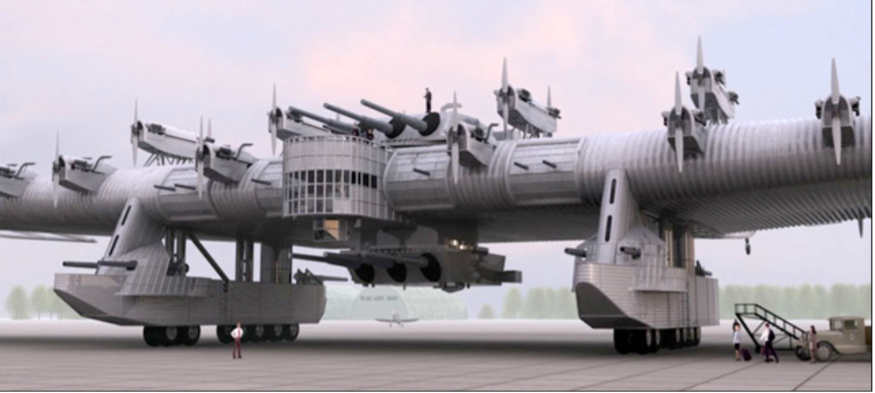
Projection of what would be the K-7 in its final version

The idea was simple: the K-7 was to be a real flying fortress. For that, it had firing turrets, a fuselage coated with molybdenum chrome steel, a 53-meter wingspan and cannons similar to those used on battleships at the time. There was also the desire to create a civilian version, capable of transporting more than 120 passengers.
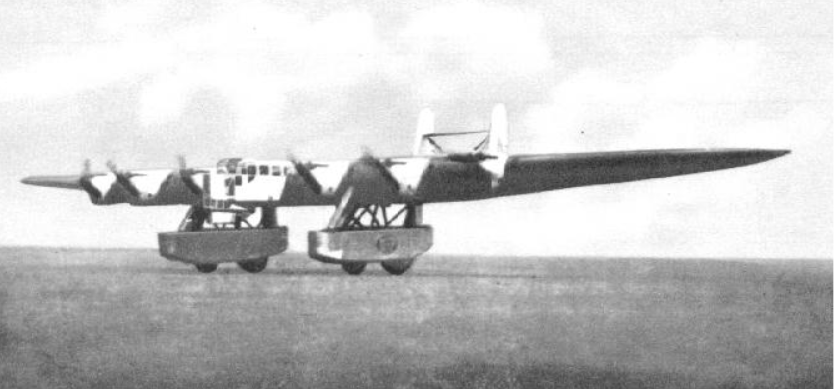
The project was led by Konstantin Kalinin, a Russian pilot who had participated in the Russian Civil War as well as World War I. The prototype plane was built in Kharkov and took approximately 2 years to complete. Initially its engines would be 6 Mikulin AM34F, 750hp, divided along the entire wing. This did not prove to be completely efficient and one more engine was installed at the rear in a pusher configuration.
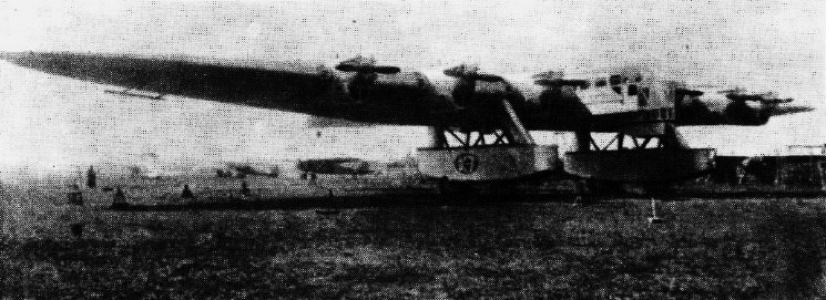
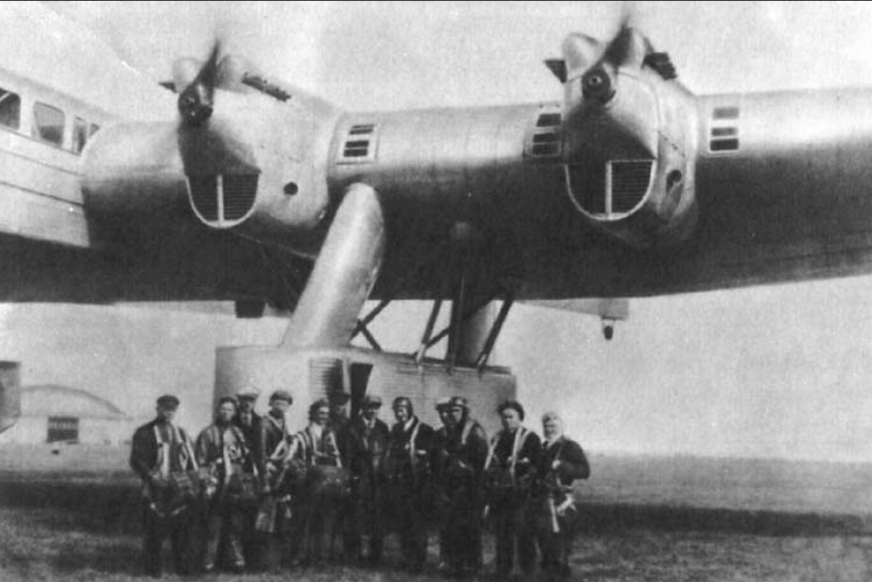
 

The giant took to the skies on August 11, 1933. The flight? Well, not very satisfying. A lot of instability and a serious engine vibration problem threatened to damage the fuselage. The solution found was to reinforce the “tail boom”, name given to this type of tail used in the Kalinin K-7. Other flights followed until the fateful accident on November 21, 1933, killing 14 crew members and one person on the ground. The cause of the accident was a serious break in one of the tail parts, causing instability and overthrowing the giant. The sabotage hypothesis was taken into account by the Soviet government, as market competition with Tupolev was very fierce, and the end of the investigation was never revealed. Incidentally, the plane itself was never much revealed by the Soviets. Its existence was confirmed only recently, when a Russian newspaper went after the story and got documents that proved everything we tell here. Another two prototypes were built, but the project was canceled in 1935.

João Henrique Barboza Jorgetto

Graduated in Public Relations and International Relations. Passionate about listening to and telling stories, he found in the field of Communication the perfect formula to transform work into fun. In his professional career, he had experience in the aviation sector, at Embraer, where the constant contact with the atmosphere of the sector brought stories, tales, and mysteries that captivated him and made him create a series of stories from the past and present of this universe called Aviation.

Author
Inhema, Brazil

Leave a Reply

Your email address will not be published. Required fields are marked *

+RECENTS

American’s “Flights” That Never Leave the Ground

American Airlines’ Landline strategy is turning some ultra-short regional “flights” into premium motorcoach segments that are s...

SAS Cuts 1,000 Flights as Fuel Costs Surge

SAS’s decision to cancel about 1,000 flights in April was one of Europe’s clearest early signs that the fuel shock had moved fr...

KLM’s First A350 Reaches Final Assembly

KLM’s first Airbus A350 has reached Airbus’s final assembly line in Toulouse, a major milestone in the Dutch carrier’s long-hau...

Air France A350 Diverts Over Electrical Odor

Air France flight AF178 from Paris Charles de Gaulle to Mexico City diverted to Bermuda on 3 April after the crew reported an e...

TSA Pay Restores Airport Flow

U.S. airport operations began stabilizing after Transportation Security Administration officers finally received retroactive pa...
+RECENTS

American’s “Flights” That Never Leave the Ground

American Airlines’ Landline strategy is turning some ultra-short regional “flights” into premium motorcoach segments that are s...

SAS Cuts 1,000 Flights as Fuel Costs Surge

SAS’s decision to cancel about 1,000 flights in April was one of Europe’s clearest early signs that the fuel shock had moved fr...

KLM’s First A350 Reaches Final Assembly

KLM’s first Airbus A350 has reached Airbus’s final assembly line in Toulouse, a major milestone in the Dutch carrier’s long-hau...

Air France A350 Diverts Over Electrical Odor

Air France flight AF178 from Paris Charles de Gaulle to Mexico City diverted to Bermuda on 3 April after the crew reported an e...

TSA Pay Restores Airport Flow

U.S. airport operations began stabilizing after Transportation Security Administration officers finally received retroactive pa...